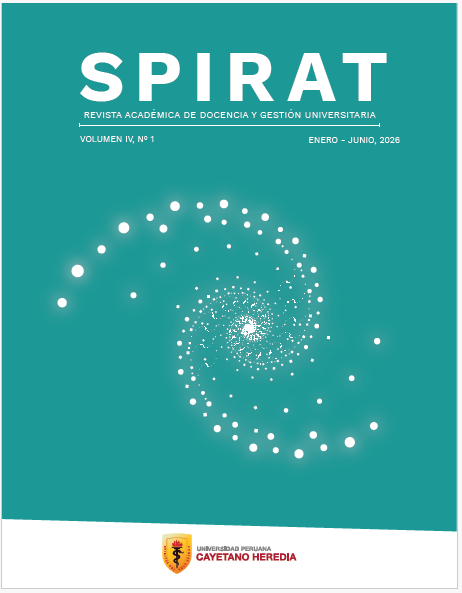
Use of Artificial Intelligence in Teaching and Research in Higher Education
DOI:
https://doi.org/10.20453/spirat.v4i1.7141Keywords:
artificial intelligence, teaching, research, higher educationAbstract
Objective: This article aims to analyze the use of Artificial Intelligence (AI) in teaching and research within higher education. Context: AI creates exciting possibilities for both teaching and research. Regarding teaching, it offers a significant opportunity to rethink curricula, training strategies, instructional design, tutoring practices, and ethical considerations. In terms of research, it enables new modes of inquiry by providing diverse resources and tools to carry out the various stages of the research process. Using an essay format and a qualitative methodology based on document analysis, this study examines texts addressing various aspects of AI's integration into higher education—a topic that has sparked considerable interest among both faculty and students regarding its application in academic activities. Conclusion: The study concludes that artificial intelligence presents an opportunity to transform higher education and reshape how teaching and research are conducted. This entails re-examining curricula and training strategies, rethinking instructional design, and strengthening the digital competencies of educators. Future studies should continue to explore the experiences and strategies associated with AI use within the pedagogical practices of teachers and researchers
Downloads
Downloads
Published
How to Cite
Issue
Section
License
Copyright (c) 2026 Mauricio Zeballos Velarde, Elisa Robles Robles

This work is licensed under a Creative Commons Attribution 4.0 International License.