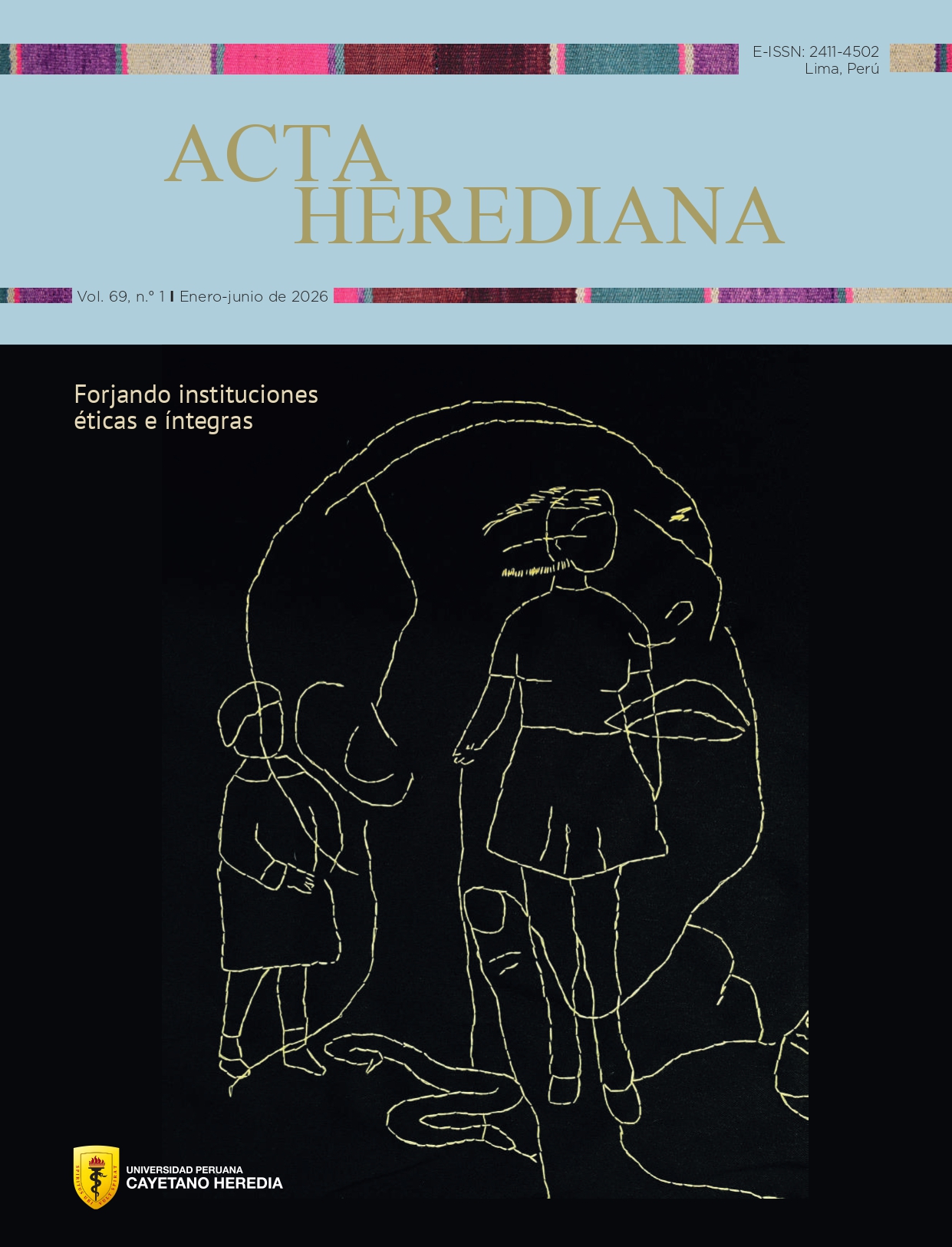
Life's extremes: a humanist perspective of birth and death
DOI:
https://doi.org/10.20453/ah.v69i1.8148Keywords:
bioethics, embryonic development, terminal care, death with dignity, palliative careAbstract
Contemporary bioethics faces its most complex dilemmas at the two extremes of human life: birth and death. This essay examines these extremes from a humanist perspective, combining the latest scientific evidence with Western philosophy and artistic tradition. At the beginning of life, it analyzes the moral status of the embryo, assisted reproductive technologies, gene editing via CRISPR-Cas9, and the management of surplus embryos, emphasizing the tensions that arise between reproductive autonomy, social justice, and the precautionary principle. At the end of life, it addresses palliative care, the limitation of therapeutic effort, advance directives, death with dignity, and international regulation of euthanasia and medically assisted suicide. It is proposed that art constitutes a legitimate methodological resource for bioethical teaching and reflection, as it provides a language capable of naming what science has not yet formulated.
Downloads
References
Ad Hoc Committee of the Harvard Medical School to Examine the Definition of Brain Death. (1968). A definition of Irreversible Coma [Report]. JAMA, 205(6), 337-340. https://doi.org/10.1001/jama.1968.03140320031009
Battin, M. P., Van der Heide, A., Ganzini, L., Van der Wal, G., y Onwuteaka-Philipsen, B. D. (2007). Legal physician-assisted dying in Oregon and the Netherlands: Evidence concerning the impact on patients in “vulnerable” groups. Journal of Medical Ethics, 33(10), 591-597. https://doi.org/10.1136/jme.2007.022335
Beauchamp, T. L., y Childress, J. F. (2019). Principles of biomedical ethics (8.ª ed.). Oxford University Press.
Bernacki, R. E., y Block, S. D. (2014). Communication about serious illness care goals: A review and synthesis of best practices. JAMA Internal Medicine, 174(12), 1994-2003. https://doi.org/10.1001/jamainternmed.2014.5271
Bosslet, G. T., Pope, T. M., Rubenfeld, G. D., Lo, B., Truog, R. D., Rushton, C. H., Curtis, J. R., Ford, D. W., Osborne, M., Misak, C., Au, D. H., Azoulay, E., Brody, B., Fabre, J., Hall, J. B., Lanken, P. N., Marschall, D., Moss, M., Puntillo, K. A., y White, D. B. (2015). An official ATS/AACN/ACCP/ESICM/SCCM policy statement: Responding to requests for potentially inappropriate treatments in intensive care units. American Journal of Respiratory and Critical Care Medicine, 191(11), 1318-1330. https://doi.org/10.1164/rccm.201505-0924ST
Bromfield, N. F., y Rotabi, K. S. (2014). Global surrogacy, exploitation, human rights and international private law: A pragmatic stance and policy recommendations. Global Social Welfare, 1(3), 123-135. https://doi.org/10.1007/s40609-014-0019-4
Buonarroti, M. (1508-1512). La Creación de Adán [Fresco, 280 × 570 cm]. Capilla Sixtina, Museos Vaticanos (Ciudad del Vaticano). Dominio público.
Collins, F. S., Morgan, M., y Patrinos, A. (2003). The Human Genome Project: Lessons from large-scale biology. Science, 300(5617), 286-290. https://doi.org/10.1126/science.1084564
Comisión Europea. (2000). Comunicación de la Comisión sobre el recurso al principio de precaución. COM/2000/0001 final. https://eur-lex.europa.eu/legal-content/ES/TXT/?uri=CELEX%3A52000DC0001
Comisiones Regionales de Verificación de la Eutanasia. (2024). Informe Anual 2023. https://english.euthanasiecommissie.nl/site/binaries/site-content/collections/documents/annual-reports/2002/annual-report/annual-reports/COMISIONES+REGIONALES+DE+VERIFICACIO%CC%81N+DE+LA+EUTANASIA-Informe-anual-2023.pdf
Da Vinci, L. (atrib.). (c. 1490-1491). Madonna Litta [Temple sobre tela, 42 × 33 cm, inv. ГЭ-2763]. Museo Estatal del Hermitage (San Petersburgo, Rusia). Dominio público.
Leonardo da Vinci (1452-1519). El feto en el útero: estudios y notas sobre la reproducción. c. 1511 [Tiza negra y roja, pluma y aguada de tinta sobre papel, RCIN 919102]. Royal Collection Trust (Windsor Castle, Reino Unido). Dominio público. https://www.rct.uk/collection/919102
David, J. -L. (1787). La muerte de Sócrates [Óleo sobre tela, 129,5 × 196,2 cm, acc. 31.45]. The Metropolitan Museum of Art (Nueva York, EE. UU.). Dominio público. CC0 1.0. https://www.metmuseum.org/art/collection/search/436105
Delacroix, E. (1830). La libertad guiando al pueblo [Óleo sobre tela, 260 × 325 cm]. Musée du Louvre (París, Francia). Dominio público.
Dworkin, R. (1993). Life’s dominion: An argument about abortion, euthanasia, and individual freedom. Knopf.
Emanuel, E. J., Onwuteaka-Philipsen, B. D., Urwin, J. W., y Cohen, J. (2016). Attitudes and practices of euthanasia and physician-assisted suicide in the United States, Canada, and Europe. JAMA, 316(1), 79-90. https://doi.org/10.1001/jama.2016.8499
European Society of Human Reproduction and Embryology. (2023). ART fact sheet 2023. https://www.eshre.eu/-/media/sitecore-files/Press-room/ESHRE_ARTFactSheet_v10_2025.pdf
Fixmer-Oraiz, N. (2013). Speaking of solidarity: Transnational gestational surrogacy and the rhetorics of reproductive (in)justice. Frontiers: A Journal of Women Studies, 34(3), 126-163. https://doi.org/10.5250/fronjwomestud.34.1.0126
Frangoul, H., Altshuler, D., Cappellini, M. D., Chen, Y. -S., Domm, J., Eustace, B. K., Foell, J., De la Fuente, J., Grupp, S., Handgretinger, R., Ho, T. W., Kattamis, A., Kernytsky, A., Lekstrom-Himes, J., Li, A. M., Locatelli, L., Mapara, M. Y., De Montalembert, M., Rondelli, D., Sharma, A., Sheth, S., Soni, S., Steinberg, M. H., Wall, D., Yen, A., y Corbacioglu, S. (2021). CRISPR-Cas9 gene editing for sickle cell disease and β-thalassemia. The New England Journal of Medicine, 384(3), 252-260. https://doi.org/10.1056/NEJMoa2031054
Friedrich, C. D. (c. 1818). El caminante sobre el mar de nubes [Óleo sobre tela, 94,8 × 74,8 cm]. Hamburger Kunsthalle (Hamburgo, Alemania). Dominio público. https://commons.wikimedia.org/wiki/File:Caspar_David_Friedrich_-_Wanderer_above_the_sea_of_fog.jpg
Geraedts, J. P. M., y De Wert, G. M. W. R. (2009). Preimplantation genetic diagnosis. Clinical Genetics, 76(4), 315-325. https://doi.org/10.1111/j.1399-0004.2009.01273.x
Gillon, R. (2001). Is there a ‘new ethics of abortion’? Journal of Medical Ethics, 27(Suppl 2), ii5-ii9. https://doi.org/10.1136/jme.27.suppl_2.ii5
Global Observatory on Donation and Transplantation. (2024). International report on organ donation and transplantation activities 2023. https://www.transplant-observatory.org/wp-content/uploads/2024/12/2023-data-global-report-17122024.pdf
Jadva, V., Imrie, S., y Golombok, S. (2015). Surrogate mothers 10 years on: A longitudinal study of psychological well-being and relationships with the parents and child. Human Reproduction, 30(2), 373-379. https://doi.org/10.1093/humrep/deu339
Jonas, H. (1979). Das Prinzip Verantwortung: Versuch einer Ethik für die technologische Zivilisation. Insel Verlag.
Klimt, G. (1905). Las tres edades de la mujer [Óleo sobre tela, 171 × 171 cm, inv. 951]. Galleria Nazionale d’Arte Moderna e Contemporanea (Roma, Italia). Dominio público.
Lancet Commission on Global Access to Palliative Care and Pain Relief. (2023). Alleviating the access abyss in palliative care and pain relief: An imperative of universal health coverage. The Lancet, 391(10128), 1391-1454. https://doi.org/10.1016/S0140-6736(17)32513-8
Lander, E. S., Baylis, F., Zhang, F., Charpentier, E., Berg, P., Bourgain, B., Friedrich, B., Joung, J. K., Li, J., Liu, D., Naldini, L., Nie, J. -B., Qiu, R., Schoene-Seifert, B., Feng Shao, F., Terry, S., Wei, W., y Winnacker, E. -L. (2019). Adopt a moratorium on heritable genome editing. Nature, 567(7747), 165-168. https://doi.org/10.1038/d41586-019-00726-5
Monzón Marín, J. L., Saralegui Reta, I., Abizanda i Campos, R., Cabré Pericas, L., Iribarren Diarasarri, S., Martín Delgado, M. C., y Martínez Urionabarrenetxea, K. (2008). Recomendaciones de tratamiento al final de la vida del paciente crítico. Medicina Intensiva, 32(3), 121-133. https://scielo.isciii.es/pdf/medinte/v32n3/recomendacion.pdf
Munch, E. (1907). La niña enferma [Óleo sobre lienzo, 118,7 × 121 cm, N05035]. Tate Modern (Londres, Reino Unido). Dominio público.
Comité de Derechos Económicos, Sociales y Culturales de las Naciones Unidas. (2023). Observación general n.º 25 (2020), relativa a la ciencia y los derechos económicos, sociales y culturales (artículo 15, párrafos 1 b), 2, 3 y 4, del Pacto Internacional de Derechos Económicos, Sociales y Culturales). E/C.12/GC/25. Distrito general: 30 de abril de 2020. https://docs.un.org/es/e/c.12/gc/25
Nussbaum, M. C. (2001). Upheavals of thought: The intelligence of emotions. Cambridge University Press.
Oregon Health Authority, Public Health Division, Center for Health Statistics. (2023). Oregon Death with Dignity Act: 2023 data summary. Oregon Health Authority, Public Health Division. https://www.oregon.gov/oha/PH/PROVIDERPARTNERRESOURCES/EVALUATIONRESEARCH/DEATHWITHDIGNITYACT/Documents/year26.pdf
Organización Mundial de la Salud. (2020, 5 de agosto). Cuidados paliativos: datos y cifras. https://www.who.int/es/news-room/fact-sheets/detail/palliative-care
Organización Mundial de la Salud. (2022, 8 de marzo). Directrices sobre la atención para el aborto. https://www.who.int/es/publications/i/item/9789240039483
Deutsche Welle (DW). (2017, 28 de septiembre). OMS: 97 % de los abortos inseguros suceden en el tercer mundo. https://www.dw.com/es/oms-97-de-los-abortos-inseguros-suceden-en-%C3%A1frica-asia-y-latinoam%C3%A9rica/a-40716671
Pande, A. (2014). Wombs in labor: Transnational commercial surrogacy in India. Columbia University Press.
Ross, L. J., y Solinger, R. (2017). Reproductive justice: An introduction. University of California Press.
Royal College of Obstetricians and Gynaecologists (RCOG). (2022, 19 de junio). Fetal awareness: Update review of research and recommendations for practice. https://www.rcog.org.uk/guidance/browse-all-guidance/other-guidelines-and-reports/fetal-awareness-updated-review-of-research-and-recommendations-for-practice/
Rysavy, M. A., Li, L., Bell, E. F., Das, A., Hintz, S. R., Stoll, B. J., Vohr, B. R., Carlo, W. A., Shankaran, S., Walsh, M. C., Tyson, J. E., Cotten, C. M., Smith, P. B., Murray, J. C., Colaizy, T. T., Brumbaugh, J. E., y Higgins, R. D. (2015). Between-hospital variation in treatment and outcomes in extremely preterm infants. New England Journal of Medicine, 372(19), 1801-1811. https://doi.org/10.1056/NEJMoa1410689
Saunders, C. (1978). The management of terminal disease. Edward Arnold.
Savulescu, J., Kahane, G., y Dahl, E. (2015). Selecting the best children: The ethics of preimplantation genetic diagnosis. En M. Parker y R. Ashcroft (eds.), Ethical issues in medicine (3.rd ed., pp. 205-228). Oxford University Press.
Scheffer, A. (1824). La mort de Géricault [Óleo sobre tela, 36 × 46 cm, inv. M. I. 209]. Musée du Louvre (París, Francia). Dominio público. https://collections.louvre.fr/ark:/53355/cl010066524
Singer, P. (2011). Practical ethics (3.ª ed.). Cambridge University Press.
Society for Assisted Reproductive Technology. (2023). SART national summary report 2023. https://www.sartcorsonline.com/rptCSR_PublicMultYear.aspx
Sulmasy, D. P. (2020). Dignity and bioethics: History, theory, and selected applications. En A. Schulman (ed.), Human dignity and bioethics (pp. 469-501). Notre Dame Press.
The Lancet. (2022). Abortion is healthcare. The Lancet, 399(10326), 619. https://doi.org/10.1016/S0140-6736(22)00219-5
Twycross, R. (2019). Introducing palliative care (5.ª ed.). Radcliffe Publishing.
UNESCO. (2021). Recomendación sobre la ética de la inteligencia artificial. https://unesdoc.unesco.org/ark:/48223/pf0000381137_spa
Vermeer, J. (c. 1670-1671). Mujer escribiendo una carta con su criada [Óleo sobre tela, 71,1 × 60,5 cm]. National Gallery of Ireland (Dublín, Irlanda). Dominio público.
Yadav, K. N., Gabler, N. B., Cooney, E., Kent, S., Kim, J., Herbst, N., Mante, A., Halpern, S. D., y Courtright, K. R. (2017). Approximately one in three US adults completes any type of advance directive for end-of-life care. Health Affairs, 36(7), 1244-1251. https://doi.org/10.1377/hlthaff.2017.0175
Downloads
Published
How to Cite
Issue
Section
License
Copyright (c) 2026 Manuel Pérez Martinot

This work is licensed under a Creative Commons Attribution 4.0 International License.
All articles published in Acta Herediana are under a Creative Commons Reconocimiento 4.0 International license.
The authors retain the copyright and grant the journal the right of first publication, with the work registered with the Creative Commons License, which allows third parties to use what is published whenever they mention the authorship of the work, and to the first publication in this magazine.
Authors can make other independent and additional contractual agreements for the non-exclusive distribution of the version published in this journal, provided they clearly indicate that the work was published in this journal.
The authors can file in the repository of their institution:
The research work or thesis of degree from which the published article derives.
The pre-print version: the version prior to peer review.
The Post-print version: final version after peer review.
The definitive version or final version created by the publisher for publication.